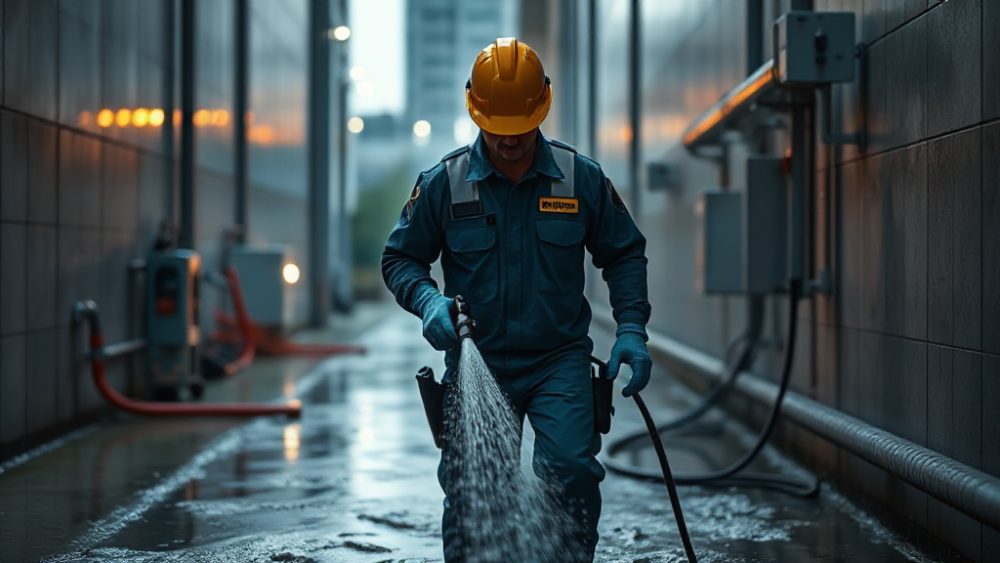
How to Choose a Desentupidora in Artur Alvim São Paulo SP Without Guesswork
If you already know what a blocked drain feels like, the real question is not whether you need help — it is who to trust when the water is rising. The direct answer: for an experienced user, choosing a desentupidora em Artur Alvim São Paulo SP is a verification exercise, not a discovery exercise. You compare response time, equipment, diagnostic method, and how the company handles the unpleasant parts — sewage, grease, roots, and old pipes — before you let anyone start work.
Artur Alvim is a dense residential district in the East Zone of São Paulo, with a mix of older houses, low-rise buildings, and busy commercial streets. That mix matters. A blockage in a 40-year-old clay or concrete sewer line behaves very differently from a clogged kitchen sink in a recently renovated apartment. A cautious client asks about the building’s age and pipe material first, because the answer changes the tool, the time, and the price.
This is a consultant-style comparison for people who have already dealt with one emergency and do not want to repeat the experience. Beginners ask “can you come today?” Experienced users ask “what will you use, what will it cost, and what happens if the first attempt fails?” The difference in outcome is usually significant.
What changes when you already know the basics
A first-time caller tends to accept the first company that answers the phone. An experienced caller treats the phone call as a short technical interview. That shift is the single biggest change, and it is free. You are not being difficult; you are giving the technician enough information to bring the right equipment on the first visit.
From price-first to method-first
Price-first thinking leads to a cheap initial visit and a second, more expensive one. Method-first thinking asks a simple question: is this a simple obstruction, or is it a recurring problem in the building’s main line? A kitchen sink clog usually yields to a manual snake or a small electric auger. A backed-up floor drain in a basement or a slow-draining building often needs hydrojetting — high-pressure water that scours grease, scale, and roots from the pipe wall rather than just poking a hole through the blockage.
That distinction is not academic. Poking a hole through a grease clog restores flow for a few days. Cleaning the pipe wall restores flow for months. An experienced client asks which method the company plans to use and why, and listens for whether the answer matches the symptom.
From emergency-only to preventive awareness
Experienced users start to notice patterns: the same drain backing up every rainy season, a sewage smell that appears only in the afternoon, gurgling sounds after laundry. These are early signals that the problem is in the network, not in one fixture. A good desentupidora Artur Alvim will flag those patterns and recommend a camera inspection or scheduled maintenance instead of another one-off unclogging.
Preventive maintenance is where the real savings sit. Cleaning a restaurant grease trap on a schedule, or jetting a condominium’s main line once a year, costs far less than an emergency call at midnight plus water damage to a ground-floor unit.
From trusting a uniform to checking a scope
Uniforms and branded vehicles are reassuring but not sufficient. The experienced check is whether the company can describe the scope of work in writing: what will be opened, what equipment will enter the property, whether any tile or wall will be removed, and how the site will be cleaned afterward. Sewage work is dirty by nature; a company that plans for containment and cleanup is a company that has done this many times.
A side-by-side comparison in plain prose
Below is how the same service request looks from two different starting points. Read it as a comparison table written out, because the categories matter more than the labels.
| Decision point | Beginner approach | Experienced approach |
|---|---|---|
| First question | “How much to unclog a drain?” | “What is the symptom, and which method fits it?” |
| Timing | Wants the earliest possible slot | Accepts a short wait for the right crew and equipment |
| Diagnosis | Accepts a verbal guess | Asks for camera inspection on recurring blockages |
| Quote | Accepts a single number by phone | Requests a written scope with a contingency for failed attempts |
| Cleanup | Assumes it is included | Confirms containment, disinfection, and waste removal |
| Follow-up | Hopes it does not recur | Schedules maintenance or requests a report |
The pattern is consistent: the experienced client trades speed-of-booking for certainty-of-outcome. That trade is almost always worth it, because a failed first attempt doubles the cost and the disruption.
What the equipment tells you before anyone arrives
Ask what the truck carries. A company equipped for desentupidora Artur Alvim São Paulo SP work should have more than a hand snake. Hydrojetting units, electric augers of different sizes, and inspection cameras are the baseline for anything beyond a single fixture. If the answer is vague, the crew will likely arrive under-equipped and improvise.
For septic systems, ask separately about fossa septica cleaning — pumping and disposal require different authorization and equipment than drain unclogging. Mixing the two in one vague quote is a warning sign.
What the quote should actually contain
A useful quote names the service, the access point, the equipment, the expected duration, the disposal of removed material, and the conditions under which the price changes. It should also state what happens if the blockage is not resolved. Experienced clients insist on that last clause, because it separates a professional operation from an opportunistic one.
Be equally clear about access. In Artur Alvim, many properties have internal courtyards, narrow side passages, or shared garage entrances. Telling the company in advance whether a hose can reach the cleanout, or whether equipment must be carried through the house, prevents surprises on arrival.
Red flags an experienced client catches immediately
- A price given before anyone asks about pipe material, building age, or symptom history.
- Refusal to explain the method or to name the equipment.
- No mention of cleanup, disinfection, or waste disposal.
- Pressure to begin work immediately without a written scope.
- No way to confirm the company’s identity or service area.
None of these is proof of bad intent on its own, but together they describe a company optimized for speed of sale rather than quality of service. Verification before the visit is cheaper than correction after it.
How to run the call and what to do afterward
The call itself takes five minutes if you prepare. Start with the symptom: where the water backs up, how long it has been happening, whether it affects one fixture or several, and whether there is a smell. Then state the property type and approximate age, and mention any previous unclogging. That history is the single most useful thing you can provide.
Next, ask the three questions that matter: which method will be used, what the quote includes, and what happens if the first attempt fails. A confident company answers all three without hesitation. Then confirm the service window and the access route, and ask who will be on site and how they will identify themselves.
When the crew arrives, walk the access path with them before work begins. Point out fragile fixtures, recent renovations, and any cleanout you know about. If the technician recommends camera inspection mid-job, ask to see the footage — modern inspection cameras display the pipe interior in real time, and seeing it turns a sales pitch into a diagnosis.
After the work, request a brief written record of what was found and what was done. This matters for condominiums, where the síndico may need to justify the expense, and for homeowners planning a renovation. It also gives the next technician a starting point instead of a blank slate.
When to choose emergency service and when to schedule
Emergency service is for active backups, sewage entering living areas, or a complete loss of drainage in a building. In those cases, call immediately and accept the first qualified crew available. Scheduled service is for slow drains, recurring smells, and preventive maintenance. Choosing the scheduled route when the problem is not urgent usually gets you a better price and a more thorough job, because the crew is not racing to the next emergency.
If you are unsure which situation you are in, describe the symptom honestly and let the company advise. A reliable provider will tell you when a problem can wait — and that honesty is itself a useful signal.
The recommendation for a cautious client
If you have read this far, you are the experienced user this comparison is written for. The recommendation is straightforward: choose the provider that answers technical questions clearly, carries the right equipment, documents the scope, and plans for cleanup. Speed matters, but certainty matters more.
For residents and property managers in the district, the practical move is to save one reliable contact before you need it. A provider that handles unclogging, hydrojetting, septic tank cleaning, and 24-hour emergency response covers the full range of what a São Paulo property actually faces. One verified contact beats ten rushed phone calls at midnight.
Finally, treat every service as a data point. Note the date, the symptom, the method, and the result. Over a year or two, that record tells you whether you have a maintenance problem or a structural one — and that is the kind of knowledge that keeps small blockages from becoming expensive repairs.
Frequently asked questions
How quickly can a desentupidora reach Artur Alvim in an emergency?
Response time depends on traffic and the crew’s current location, but emergency services in São Paulo typically aim to arrive within a short window after the call is confirmed. When you call, give the exact address and access details so the crew is not delayed on arrival.
Is hydrojetting always better than a manual snake?
No. Hydrojetting is superior for grease, scale, and roots because it cleans the pipe wall, but it is not appropriate for fragile or damaged pipes that could be further harmed by high pressure. A manual or electric auger is often the right first step for a simple fixture clog. The correct choice depends on the pipe’s condition and the type of blockage.
What should a written quote include before work starts?
It should name the service, the access point, the equipment, the expected duration, the disposal of removed material, and the conditions under which the price may change. It should also state what happens if the blockage is not resolved. A quote missing these elements leaves room for disputes later.
Can a recurring blockage be fixed permanently?
Sometimes. Recurring blockages usually point to a structural cause — root intrusion, a collapsed section, or insufficient slope in the line. Camera inspection identifies the cause, and the fix may range from scheduled cleaning to pipe repair. Without inspection, the same clog will return.